
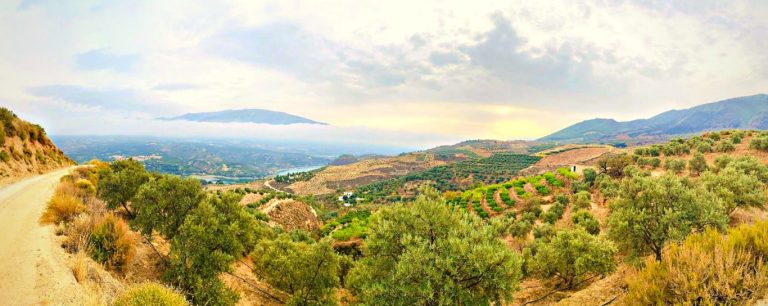
If you are looking for a getaway that combines pristine nature, unique architecture, and ancestral traditions, look no further: Las Alpujarras is your ultimate destination. This historical region, nestled on the southern slopes of the Sierra Nevada mountains in the province of Granada, is famous worldwide for its cascading white villages (pueblos blancos) that seem to hang impossibly from the edges of deep ravines.
For travelers seeking the true essence of southern Spain, away from the crowded coastal resorts, this region offers an unforgettable experience. Visiting Las Alpujarras is truly like stepping back in time. The local architecture, deeply rooted in Berber and Moorish influences from the time of Al-Andalus, is characterized by immaculate whitewashed walls, flat roofs made of launa (a waterproof grey clay), and the iconic tinaos—covered public walkways that support the upper dwellings over steep, narrow streets.
In this comprehensive guide brought to you by Rustic Blue, we will walk you through the best villages in Las Alpujarras, optimizing your itinerary so you can experience the very best of authentic, rural Andalusia.
We begin our journey in the breathtaking Barranco de Poqueira. This deep gorge, carved by centuries of glacial meltwater, is home to three of the most photogenic and celebrated villages in the entire region: Pampaneira, Bubión, and Capileira. Their close proximity makes it easy to visit all three in a single day, or even connect them via spectacular hiking trails.
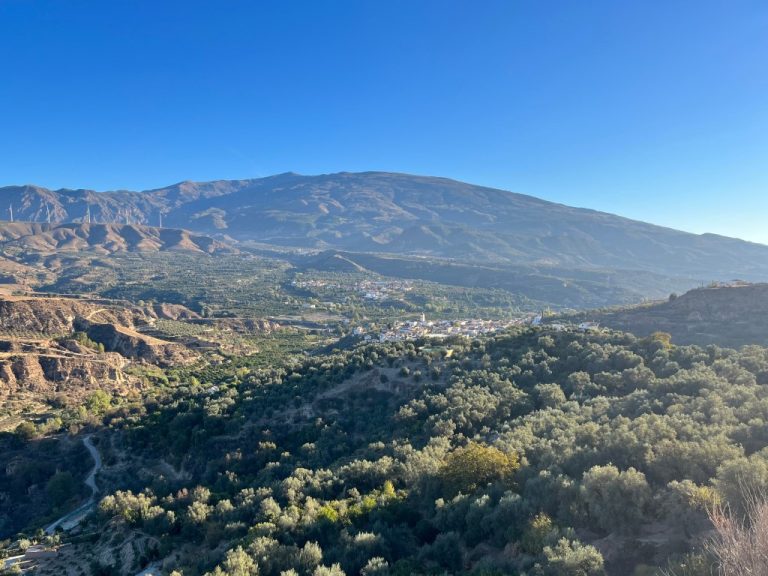
Sitting at an altitude of over 1,400 meters (4,593 feet), Capileira is the highest village in the gorge and arguably offers the most spectacular panoramic views. The name itself comes from the Latin capillaris, meaning “head” or “top,” perfectly describing its dominant position over the valley.
What to see and do in Capileira: Lose yourself in the charming, labyrinthine streets of the Barrio Alto (Upper Quarter). The houses here are perfectly adapted to the rugged terrain, creating a beautiful chaos of overlapping rooftops and flower-filled balconies. Visit the Church of Nuestra Señora de la Cabeza, rebuilt in the 18th century over the remains of an ancient mosque. Above all, make sure to stand at the Mirador del Barranco de Poqueira (Poqueira Gorge Viewpoint) to capture the absolute essence of the Alpujarras on camera.
For adventure seekers, Capileira is the ideal starting point for serious hikers looking to ascend the high peaks of the Sierra Nevada National Park, including the mighty Mulhacén, the highest peak in the Iberian Peninsula.
Located exactly halfway between Capileira and Pampaneira, Bubión is perhaps the quietest and most tranquil of the three Poqueira villages. Its urban layout is a flawless example of local architecture. The gentle sound of water—omnipresent in Las Alpujarras thanks to the ancient Moorish irrigation channels known as acequias—will accompany you on every stroll.
What to see and do in Bubión: Visit the mudéjar-style Church of the Rosario, which boasts a beautiful wooden coffered ceiling. Just steps away, you will find the Museo de la Casa Alpujarreña (Alpujarran House Museum). This museum is a must-visit; it is an impeccably preserved traditional house that shows visitors exactly what daily life was like in these remote mountains centuries ago, complete with original furniture, farming tools, and a traditional loom. Bubión is perfect for those seeking calm, authenticity, and a slower pace of travel.
Pampaneira is the lowest of the three villages in the gorge but arguably the most vibrant and commercially active. As you arrive, you will immediately notice the pristine condition of its streets, heavily decorated with colorful potted plants and overflowing with local crafts.
What to see and do in Pampaneira: The heart of the village is the Plaza de la Libertad, anchored by the impressive 16th-century Church of Santa Cruz. Just off the square is the famous Fuente de San Antonio (Fountain of St. Anthony). According to local legend, unmarried people who drink directly from its spouts will soon find a partner!
Pampaneira is widely celebrated for its thriving artisan community. The village is the best place in Las Alpujarras to purchase jarapas—traditional, brightly colored rugs and blankets woven from recycled fabric strips on wooden looms. Don’t leave without stepping into a local workshop to see the weavers in action, and make sure to sample some locally made chocolate and regional wines before you head to your next destination.
Beyond the Poqueira Gorge, Las Alpujarras stretches eastward, offering even more hidden gems that combine high-altitude living with world-class gastronomy and fascinating folklore.
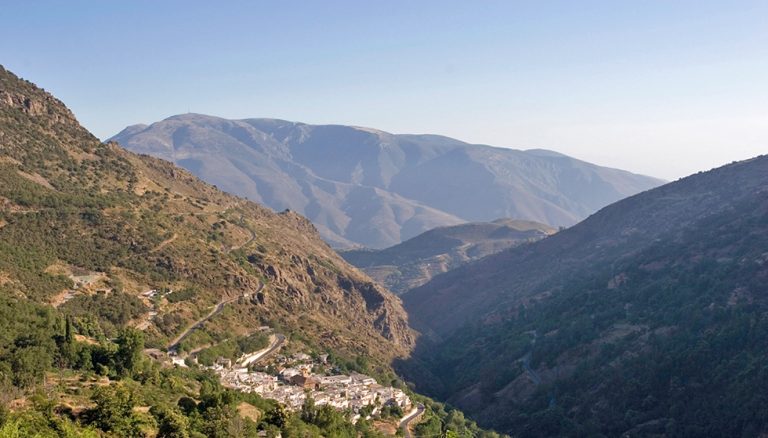
Leaving the Poqueira Gorge and driving further into the mountains brings you to Trevélez. Set in a lush valley at the foot of the Mulhacén, Trevélez claims the title of the highest village in Spain (situated at 1,476 meters in its Barrio Alto). However, what truly puts this village on the global map is its world-renowned culinary treasure: Jamón de Trevélez.
The cold, dry, and crisp mountain air provides the absolute perfect microclimate for the natural curing of Spanish ham. This tradition dates back centuries and even earned a seal of approval from Queen Isabella II in the 19th century.
What to see and do in Trevélez: The village is divided into three distinct neighborhoods: Lower, Middle, and Upper (Barrio Bajo, Medio, y Alto). Exploring all three is a fantastic way to acclimatize to the altitude while enjoying the rustic architecture. The star activity here is taking a guided tour of a secadero (a natural ham-curing facility). You will learn about the strict, time-honored curing process and, most importantly, enjoy a generous tasting of this sweet, melt-in-your-mouth delicacy paired with local wine.
For a completely different and magical experience, you must visit Soportújar. Known affectionately as the “Village of Witches” (El Pueblo de las Brujas), this town has fully embraced its centuries-old folklore. After the Moorish expulsion in the 16th century, the area was repopulated by families from northern Spain (Galicia), who brought with them their Celtic legends of witches, spells, and dark magic.
What to see and do in Soportújar: The village has cleverly transformed its spooky history into a delightful, family-friendly theme. As you wander the streets, you will encounter the Cueva del Ojo de la Bruja (Cave of the Witch’s Eye), giant spider sculptures, a magical cauldron, and the Fuente del Dragón (Dragon Fountain). Despite the playful theme, Soportújar remains a stunningly beautiful white village with incredible views over the Órgiva valley and the Mediterranean Sea in the distance.
Often referred to as the “Gateway to the Alpujarras,” Lanjarón is usually the first town you encounter when driving up from Granada or the coast. Unlike the high-altitude villages, Lanjarón sits lower down and is defined by one vital element: pristine spring water.
What to see and do in Lanjarón: The town is famous across Spain for its bottled mineral water and its historic Balneario (Spa), which has attracted health-seekers for over a century. Stroll down the main avenue lined with leafy trees, taste the different mineral waters from the public fountains scattered around the town, and explore the ruins of the Lanjarón Castle, which clings dramatically to a rocky outcrop overlooking the valley.
To make the most of your trip to the best villages in Las Alpujarras, keep these practical travel tips in mind:
How to Get There: The easiest way to explore the region is by renting a car. The drive from Granada takes about 1 hour to Lanjarón and 1.5 hours to the Poqueira Gorge. Be prepared for winding mountain roads; take your time, drive carefully, and enjoy the dramatic scenery.
The Best Time to Visit: Spring (April to June) and Autumn (September to November) are the best seasons. The weather is mild, perfect for hiking, and the landscape is either blooming with wildflowers or turning golden brown. Summers can be hot during the day but pleasantly cool at night. Winters are cold, and snow often dusts the higher villages, creating a magical, cozy atmosphere perfect for sitting by a roaring fire in a Rustic Blue rural rental.
A Hiker’s Paradise: Pack good shoes. Las Alpujarras is crisscrossed with ancient mule tracks and the famous GR-7 long-distance footpath. Walking between villages is the best way to immerse yourself in the terraced landscapes, ancient chestnut forests, and absolute silence.
What to Eat: Gastronomy here is hearty and comforting. Aside from the Trevélez ham, you must try the Plato Alpujarreño—a legendary, energy-packed dish featuring fried potatoes, fried eggs, local ham, pork loin, morcilla (blood sausage), and sweet peppers. For dessert, look for soplillos, a traditional Moorish sweet made of meringue and almonds.
Las Alpujarras offers some of the finest mountain walking, horse riding and cycling anywhere in Europe. There are fabulous riding stables with excellent horses just a kilometre away from the house.
And, of course, here you are reasonably well placed to travel to the ski resort high in La Sierra Nevada.
On the Costa Tropical, activities on offer include scuba, cavern and technical diving, as well as horse riding and tennis, paragliding, climbing, and abseiling.
Las Alpujarras is much more than a standard tourist destination; it is a profound sensory experience. It is the smell of woodsmoke drifting from chimneys on a crisp morning, the distant sound of goat bells and rushing water, the vibrant textures of a handmade jarapa, and the rich taste of cured ham paired with local wine.
Whether you are looking for high-altitude adventure, deep historical roots, or simply a peaceful retreat in one of the most beautiful corners of Andalusia, the white villages of Las Alpujarras are waiting to captivate you. Ready to explore? Browse our selection of authentic rural properties at Rustic Blue and find your perfect mountain hideaway today.
